


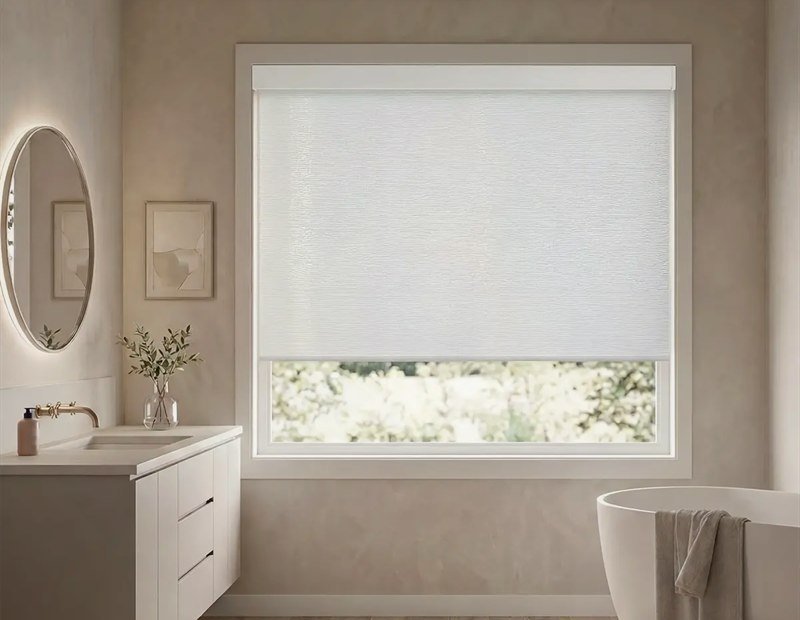
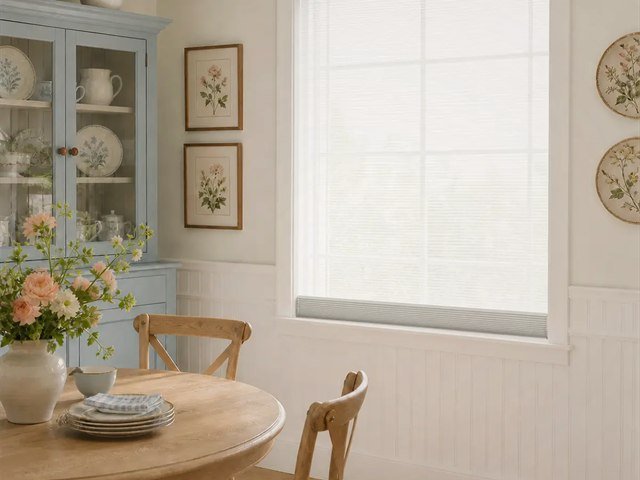

The power decision is usually made late, and it is the one most likely to cause a problem on site. Here is the straightforward version of the trade-offs.
Battery power
Battery shades need no electrician, install into a standard reveal, and are the only practical option for retrofit in a finished room. The trade-off is charging: a typical pack runs around 500 cycles, which is roughly 12 to 18 months on a twice-daily window. On a high window that is a real maintenance task.
Hardwired power
A mains supply removes charging entirely and is the right answer for high windows, high-cycle commercial windows and anywhere a power drop can be planned. The trade-off is that it must be decided before first fix; retrofitting a supply into a finished wall is expensive and disruptive.
Solar charging
The solar panel trickle charges the battery from daylight, which in practice means never charging the shade by hand. It works well on windows that receive reasonable daylight and less well on a deeply shaded north elevation in winter.
How to choose
If the window is reachable and the room is finished, battery. If the window is high, the cycle count is high, or the building is still under construction, hardwired. If the window is reachable but you never want to think about it again, battery plus solar.
Frequently asked questions
Roughly every 12 to 18 months on a twice-daily window, or around 500 cycles. Adding the solar panel removes the task in most installations.
The motor in most ranges is available in both variants, but converting requires access to the wiring and a mains supply at the window. It is far cheaper to decide at specification stage.